Beneficial bunnies

The guest house we are staying in, in Hoi An, is superb. Modern rooms, incredibly helpful owner and rabbits as pets! Even though I find yoga very calming and peaceful, there’s something about animals that can do the same – sometimes even a better job. Maybe it’s the fact that they can’t communicate verbally that gives them a vulnerability. For me it’s the way they look at you; sure it could be the lettuce you’re holding, or the treats, but I like to think its more than that. I’ve found it difficult in Vietnam as a lot of the animals are treated very poorly. Chickens and ducks stuffed into bags, alive! We even saw a woman beating her chickens the other day. I understand the cultural differences but still find it painful to see. Even chickens have feelings. Anyway, I’ll save my animal rights preach for another day.

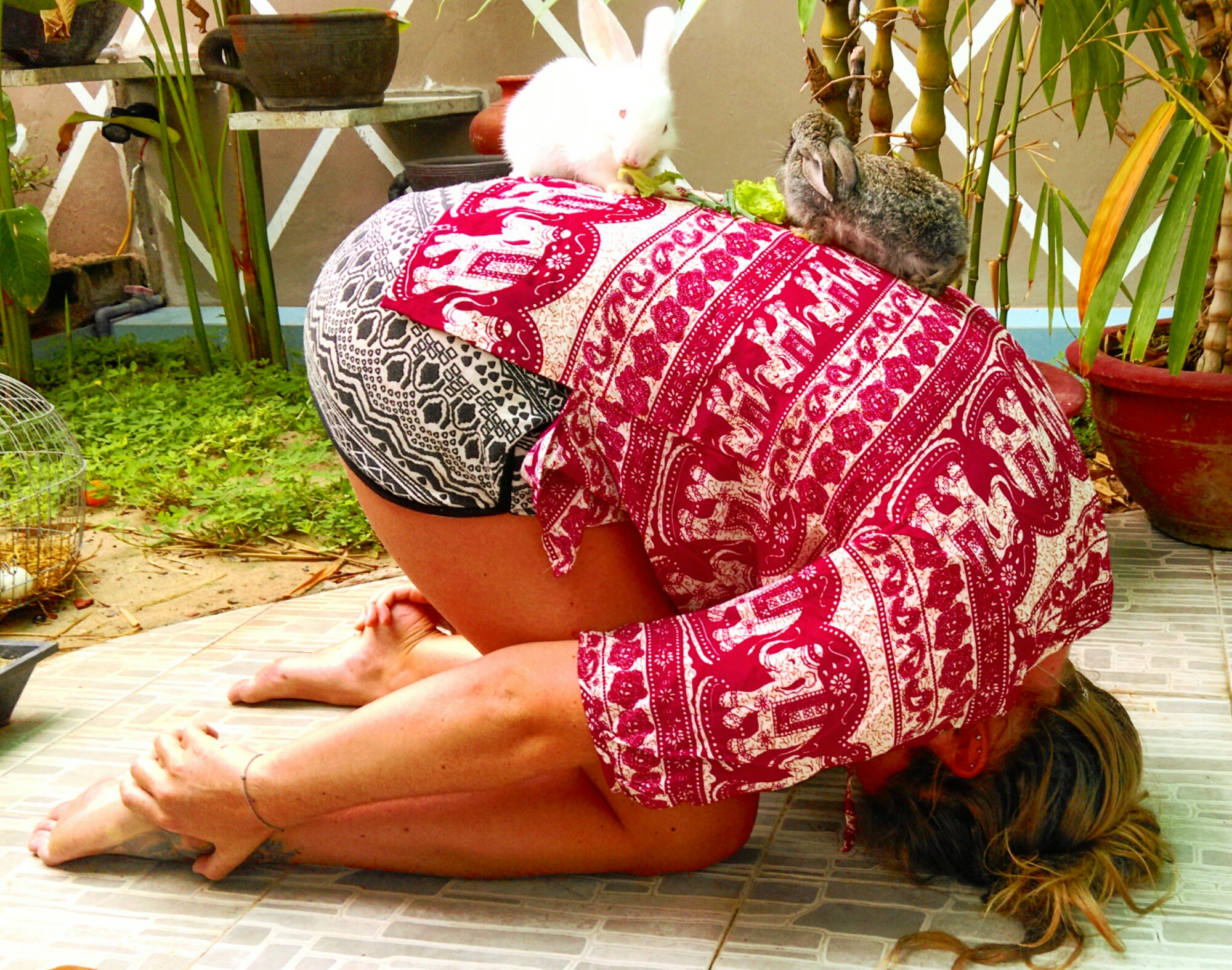
Rabbits pose or sasangasasana.

image

Great for a counter pose to any back opening asanas. Rabbits pose acts as a little inversion too as you should eventually come onto the crown of your head. Start from child’s pose and take hold of your heels, as you inhale round your back. On your exhale come onto the crown of your head, pulling the forehead as close to the knees as possible. Unless you have rabbits on your back and don’t want them to slide off!

As well as teaching yoga full time on my return to the UK, I’m thinking of doing a little dog walking too. It’s a dream for me combing these two together. So if you’ve had a long hard day at work, you can come along to a gemyoga class to sort you out mentally and physically, then go home and eat something delicious while I walk your dog! Hop on board the gemyoga animal loving hippie train! Xxx

Why bind?

I’m going to keep this short for two reasons, firstly I’m tired (we’ve spent the entire day travelling up the coast of Vietnam on a motorbike, stunning). Secondly it’s not complicated or highly spiritual, so don’t worry I’m not going to tell you how binding in yoga connects you to mother earth. Well not for everyone anyway…

In case you’re unsure creating a “bind” in yoga is usually when you bring your hands together to deepen the posture. Sometimes a bind can be created by holding onto both feet, basically your feet and hands should flow through one another, staying in contact.

When you create a bind the technical reason is to deepen the pose and therefore, with certain postures, massage your internal organs. Adding a bind is a perfect way to progress further into your practice. Usually ending in you looking like a tasty little pretzel. A lot of yogis use straps to help them create binds if they’re not quite there. I’ve never used them personally as I feel I become reliant on them. For a lot of people though, they’re key to helping achieve certain postures. It’s just whatever works for you.

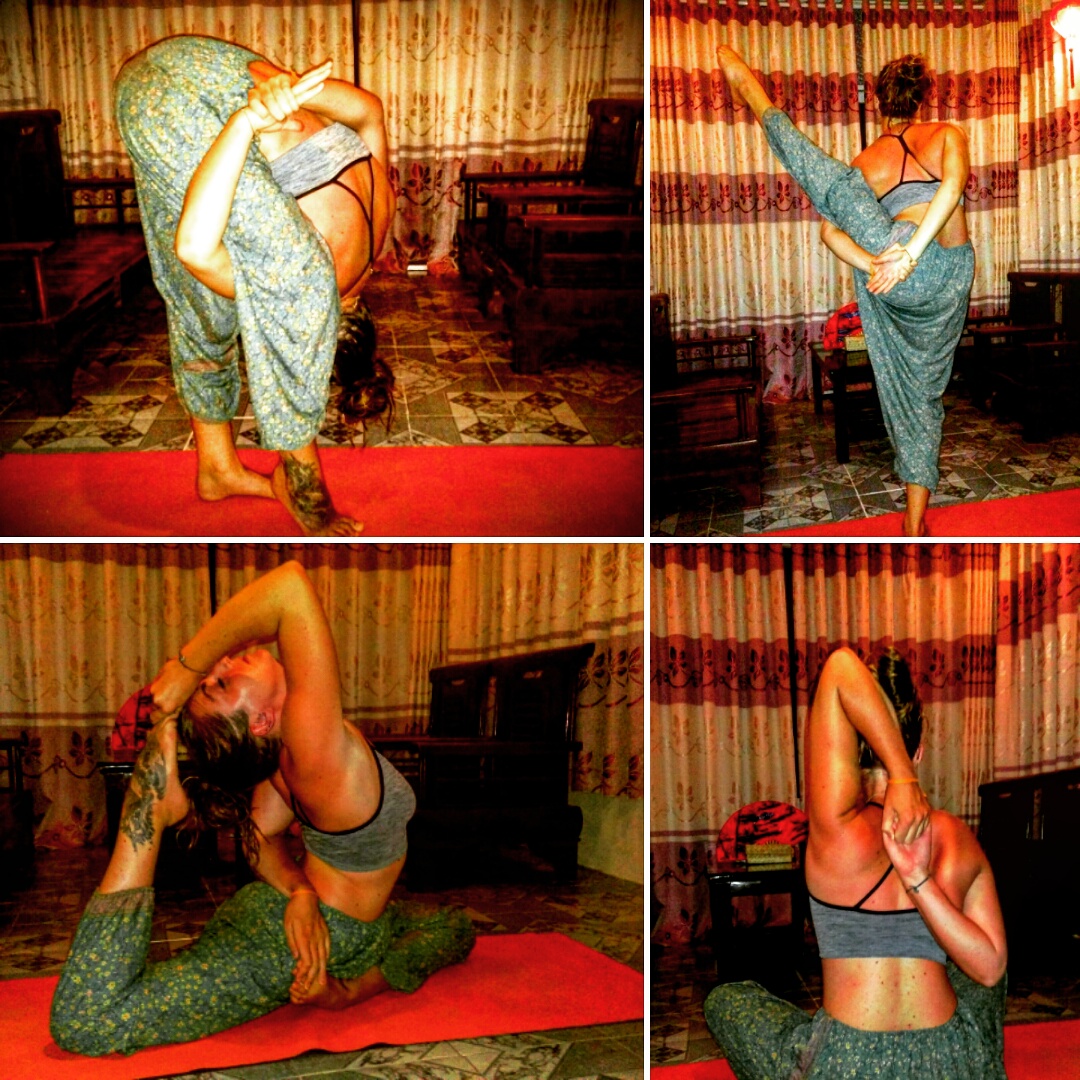
So that’s the technical side, now for my hippie view on why I love a good bind. The obvious first reason – falling out of an asana is hilarious, falling out of an asana when you have a bind is even better. Personally for some reason, even when I know the pose isn’t going to happen, my bind stays perfectly connected as my body rolls or collapses to the ground. Binding is a great way to have a laugh at yourself, and laughter is good for the soul!

Secondly, it gives me a visible goal. I never do my practice in front of a mirror, just like I never ask my students to face one. If I can feel or see where my hands or feet need to connect without straining to look in the mirror, it makes the situation much calmer. The situation occasionally turns to excitement when you’re attempting a bind and feel something, then realise its your foot or other hand.  I’m sure a lot of people say that you should watch yourself when you’re practising, to see if your alignment is correct, but for me it doesn’t work. Knowing in my head what the pose looks like, then seeing where my hands or feet need to join provides me with a strong focus. If you are unsure about your alignment, and are practising at home, try recording yourself then play it back. It saves your neck!

Lastly, there’s something very comforting about having your entire body connected physically. No loose ends, no hands or legs waving about. You’ve just created this nice secure cocoon where everything is flowing around continuously. When I deepen my practice by creating a bind I often find that I stay longer in the pose beacause I don’t want to let go. I suppose it’s similar to holding hands with your parents when you were younger, or with your partner. Binds offer a sense of security and stability. If you’re not falling out of them…

Stay connected xxx

image

Rejuvenated.

We have now been in Vietnam for a little over ten days. The majority of that time, unfortunately, I’ve been ill. Something nicknamed “Saigon squirts”, which I’m sure you didn’t need to know, and needs no explaining!

So I got to know our hotel rooms really well. I also started to miss home – a lot. I suppose laying in bed for a while gives you too much time to think. Anything James brought back for me to try to eat or drink I refused. Bottled water was about all I could handle. I started to resent what was outside my hotel door. The smell of “foreign food” made my stomach turn, literally. I wanted to hear a British accent whilst sipping Yorkshire tea and munching on crumpets. I was too exhausted to think about trying to explain to someone that I don’t eat meat. Basically I was fed up, ill and missing home comforts with a body that felt like I’d never practiced yoga in my life.

Up in the mountains and the cool temperatures of Da Lat, I’d had enough. James too. We made a trip to the local hospital. I sat on a plastic stool in the middle of a Vietnamese hospital explaining to a doctor that my tummy hurt and I hadn’t eaten for a few days. I was surrounded by sick people, seriously sick people. Blood samples thrown everywhere, babies crying, people laying anywhere. Suddenly I felt rather sheepish. Never the less I was seen, given antibiotics and back to my room I went. With a new mind set.

I’m not sure if it was the cool temperatures of Da Lat, seeing the locals in the hospital or simply having medication but I felt like a heavy weight had been lifted. After feeling like I’d turned my back on new experiences and cultures, I needed to open my mind and heart (in the hippie sense of course).

The few times I’ve practiced since being ill I have focused entirely on opening my heart and stimulating my mind.
Back bends are a fantastic way to achieve this. You may think I’m bonkers, but just stand and puff your chest out, open your arms, and you’ll feel a little more love. No? Here’s some guidance through crescent moon pose or Anjaneyasana.

Make sure you’re comfortable in a lunge first. If your knee on the floor is sore, use a blanket underneath for some padding. Sink down into the hips. Place both palms on the lower back to start with, either side of the spine. Draw the elbows together as you keep the chest (heart) open. Don’t see yourself bending your spine, visualise the hips moving forward, drop the head back when you feel ready. ONLY when you feel comfortable and feel the spine is flexible enough would I recommend taking the hands away. Creating a nice crescent moon shape.

image

Wheel pose or Chakrasana (below).
This asana opens up your heart good and proper, all the love is coming your way with this one. All I’ve done with wheel pose below is open my chest even more. Come into normal Chakrasana and bring your feet together. Start to straighten the legs and you’ll feel your heart lifting. This is quite strong on the spine, so listen to what your body is telling you. When you’re ready to come out of either of these poses, always finish with a counter pose. Something as simple as laying on your back and drawing the knees in to the chest. It’s my favourite anyway!

image

Have fun letting all the love in. By the way, that’s the post office in Saigon! How amazing is it, royal mail eat your heart out. Lots of love Grace xxx

The Khmer people

image

Before I realised what had happened, I woke up looking out over the river and fresh green country side. Phnom Penh was hours away. Boarding our boat early in the morning, way back in Phnom Penh, to cruise down the Mekong river into Vietnam, I must have instantly fallen asleep.

Knowing a little of Cambodian history didn’t really prepare me for what I was about to see. We visited the very sad but very important parts of Phnom Penh – the killing fields and Tuol Sleng museum. I’m not going to delve too deep into these places of horror. We had to visit both places over two days, as visiting one after another was too heart breaking. You can read over and over again what went on in the those dark years, but when you stand where those people stood, it leaves you much emptier than you can imagine.

A survivor of the genocide talked years later about how she is trying to move on from her experience and heal. To hear her even begin to use the word heal after such a short amount of time left me overwhelmed. Strength like this must be so hard to find, but with time and the right kinds of help, people do seem to find a way. Mediation was one of these ways.

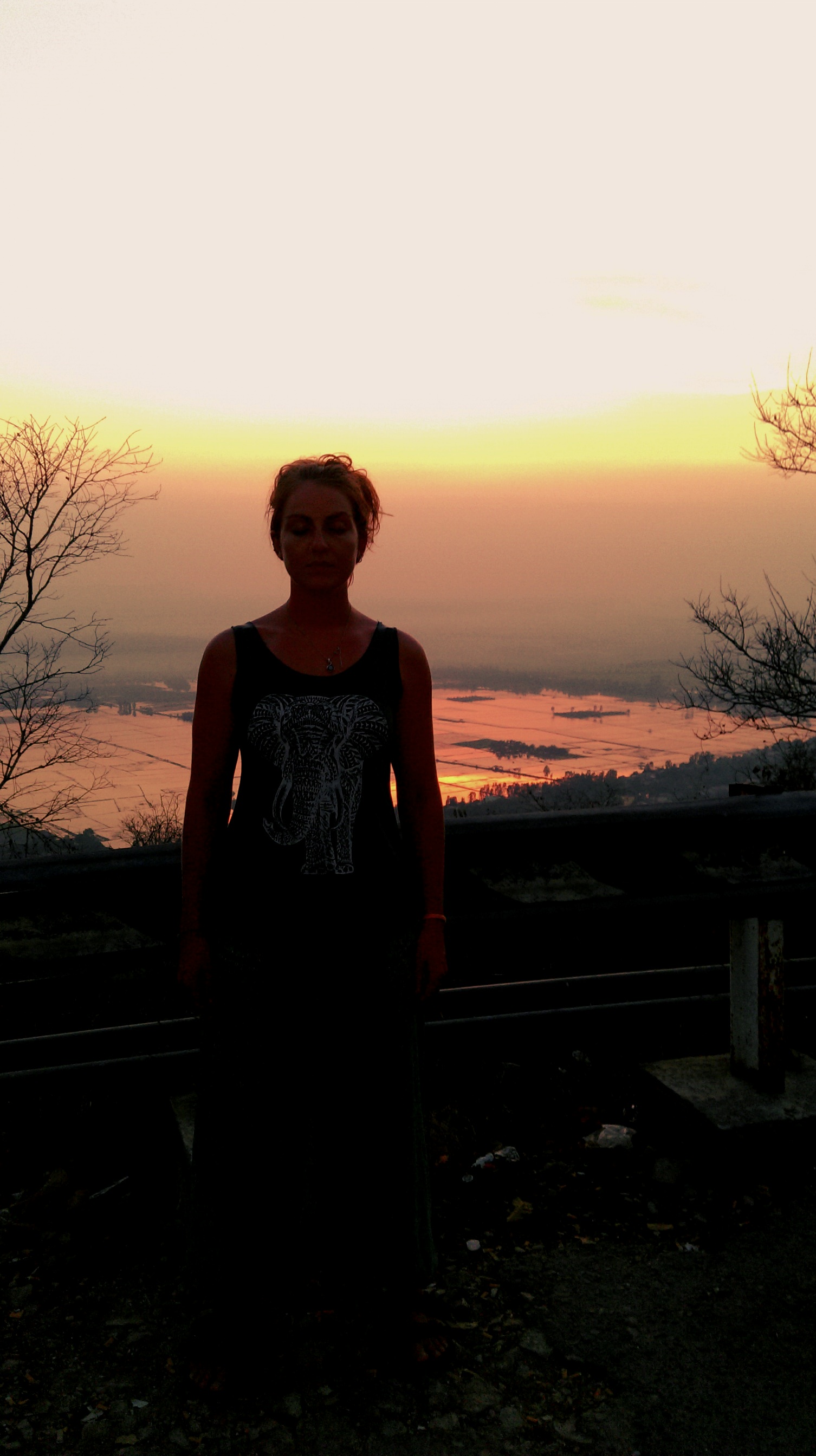
In your practice don’t forget to take the time to stop and stand or sit. Close your eyes and take some breaths. In no way shape or form am I comparing the events of Cambodia to our usual “struggles” in the western world, all I’m saying is don’t underestimate the power of simply stopping and taking a few minutes.

Mountain pose or Tadasana is great if your mind is full. Sometimes I don’t want to sit down, so you can stand with your feet a little distance apart. Keep your hands down with palms facing the outside of your thighs or, if you want to feel more energised, turn the palms outwards. Grace x

Floating in Angkor Wat

I keep seeing the camouflaged faces, tree roots the size of houses and beautiful carvings every time I close my eyes. Angkor Wat gave me that feeling, much like when a peacock opens it feathers, almost hypnotic. I could have quite happily just stayed in one area, staring at the immaculately carved stories on the walls. Truly a fascinating place.

Ta Phrom however, in my opinion, was like seeing 100 peacocks doing a dance in sequence – spectacular. Nature finding its way through nearly 1000 year old temples sculpted by man. It was a thing of beauty and will stay with me for ever.

It seemed only right, therefore, to share with you some guidance on peacock  pose or Mayurasana.

image

It’s one of the annoying postures that all of a sudden just “clicks”. Usually wrist flexibility gets in the way of this posture, so really warm them up before attempting. Coming onto all fours, turn your palms backwards, fingers facing behind you. Stay here for a few breaths if you’re new to this pose, just to get the feel of really opening your forearms. As you inhale bring your body into a plank posture, on the balls of your feet and pushing the heels away from you. Rest your elbows on the outer edge of your stomach (obliques).

On your exhale, start to walk your toes forward, bringing the weight over your wrists. Really squeeze the tummy muscles as well as engaging your shoulders and forearms. Keep looking forward as you point the toes and bring them up off the ground. Eventually aim to float your legs up higher whilst keeping your balance and face off the floor!

For months I always tried to achieve this posture by kicking up into it. Needless to say it never worked and felt awkward. For me this posture “clicked” once I trusted my body more. Really bringing the weight over the wrists is key. Get strutting my little peacocks. Grace x

Painful postures

image

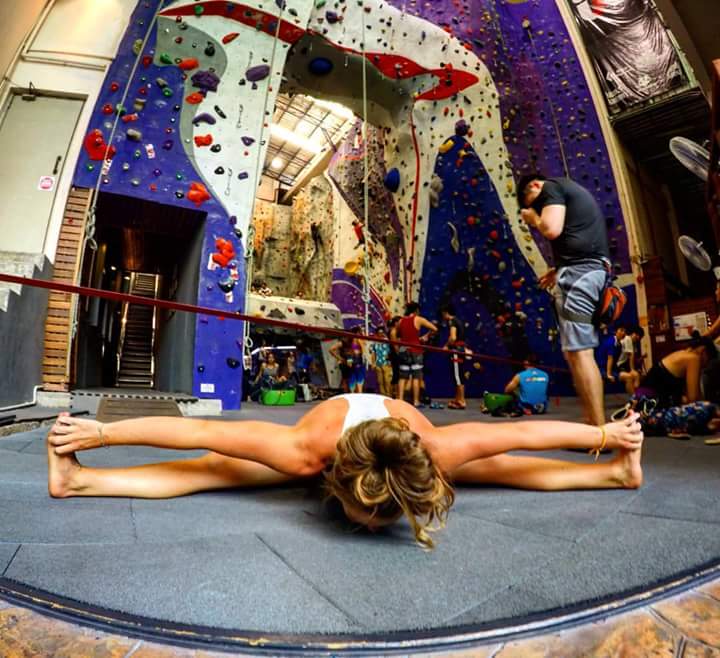
It’s James’ birthday and I found an excellent climbing wall in Bangkok to take him to. We climbed until our skin fell off, then unlike me I needed a stretch.

Upavistha Konasana or wide angle seated forward fold. I also, personally, call this posture painful!

Attending yoga classes or teaching one, this posture for me is extremely tricky and requires a very deep breath with a calm mind. For some yogis however, this posture comes with ease. I’ve had first time yogis very simply laying their chest flat on the floor with no worries, glancing about wondering if they’re doing something wrong.

If you find this posture difficult and painful like me, see if this helps at all.

To start with, if sitting with your legs apart is not working at all and you feel like your spine is arching and falling back, roll your matt behind you and place your sitting bones on it. This will tilt your pelvis and should feel a little easier. Next, just sit and maybe move your body around a little. Sway from side to side then begin to walk your fingers forward. Lower the chest to the ground instead of the head with a nice lengthened spine.

Once you’re feeling comfortable, which took me a while(!), try to take hold of your feet, and with every exhale gently bring your chest closer to the ground.

Something else I tried for this posture which also helped: Whenever I was reading or writing, sat watching a movie or just chilling out, I would try and sit in this posture even if just for a few minutes at a time. Be careful not to expect too much from your hamstrings too soon. Grace x

Free as a bird

image

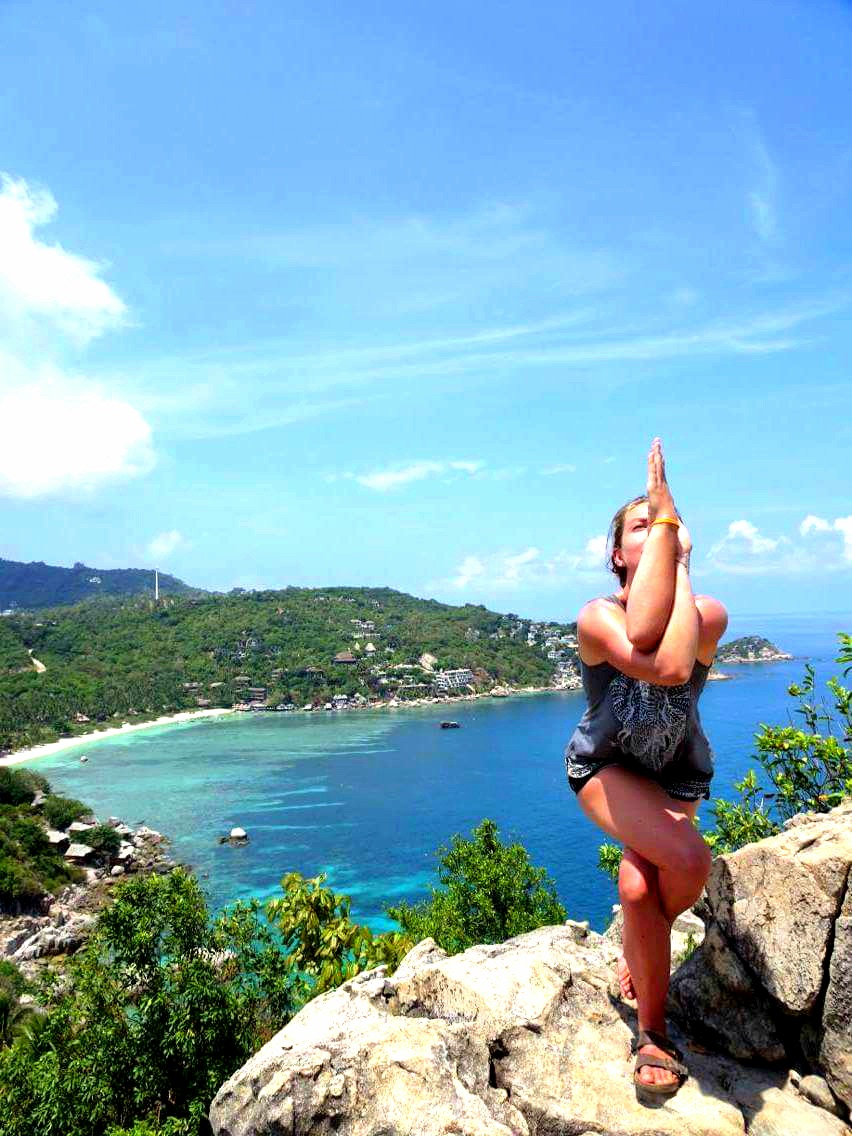
Eagle pose or garudasana

We climbed to a truly spectacular view point yesterday on the island of Koh Tao. Even though I was exhausted, exceptionally sweaty and hot, what we saw from the top was totally worth it.

Walking in this heat makes my legs feel super tight so my practise recently has been about releasing tight legs. Hopefully, once WiFi improves, I’ll be able to upload you guys a sequence I’ve just filmed about improving leg flexibility. It’s a sequence I include in my daily practice. Here’s a sneak preview.

image

Eagle pose is great to finish a leg opening sequence with. Stand on one leg, bend at the knee and sit the sitting bones back slightly. Bring the other leg over the top of your grounded leg avoiding the knee joint. Trying to keep your balance, almost intertwine the legs together. Aim to eventually bring the leg all the way around, until the back of the foot acts as an anchor around your grounded legs calf.

When it comes to hands I started practicing this posture with Namaste at heart centre. If you can intertwine your arms too, once you’ve done this, try to lengthen them up to the sky as well. Always practise both sides. Eagle pose is great for strengthening and stretching your ankles, among other benefits! If you can get your hands like a pretzel as well, then its also a brilliant release on the shoulderblades.

You don’t need bulging biceps to balance on boulders.

We have made it to the beautiful island of Koh Tao in Thailand. This picture postcard picturesque little gem of an island not only has killer back drops for my website, it also has bouldering… On the beach! With climbing being possible for the several days we are on Koh Tao, I’ve been focusing my practise on improving my shoulder strength and stability.

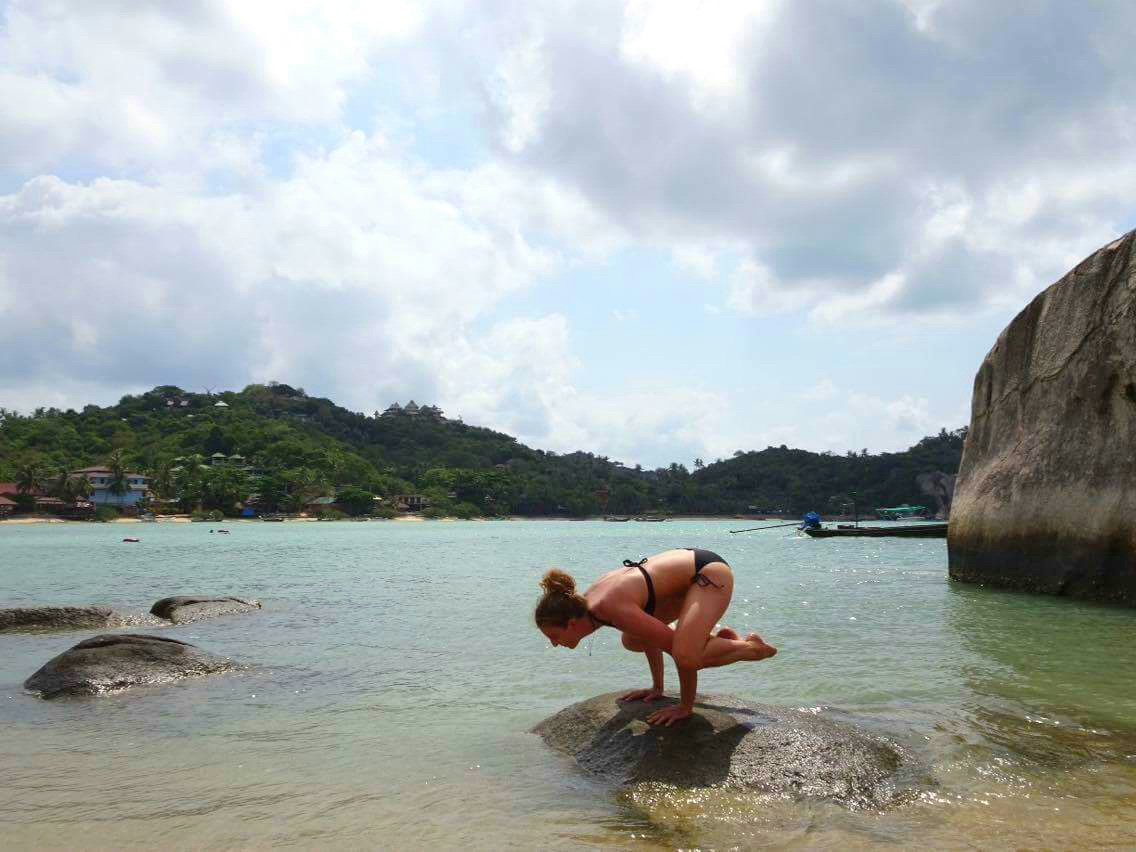
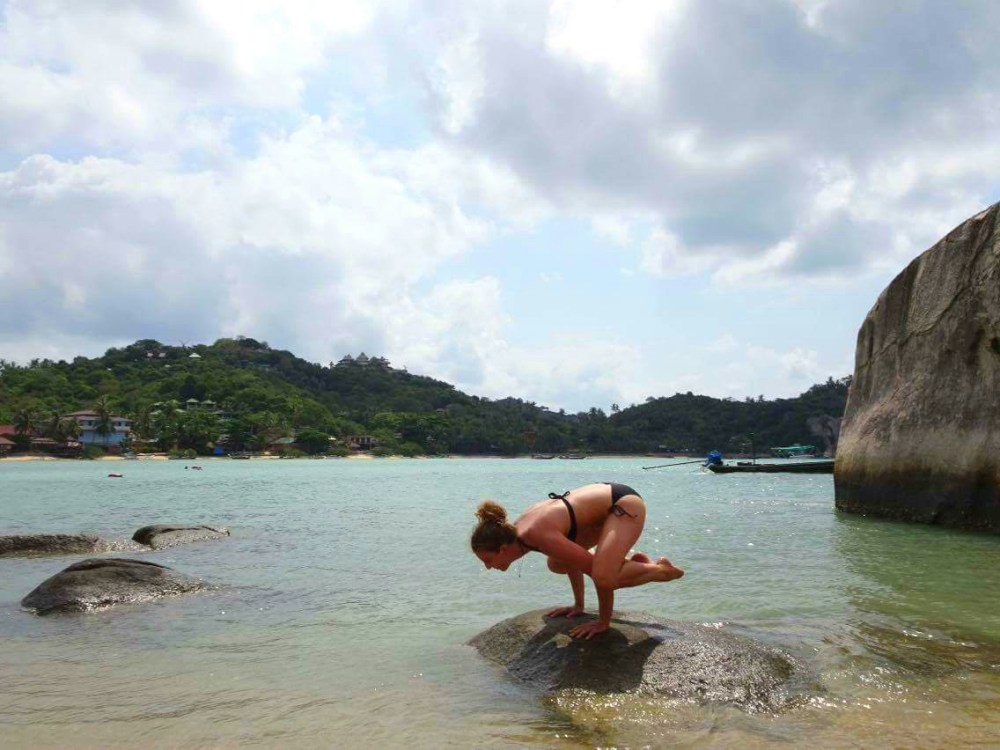
If you’re new to arm balances in yoga try not to be deterred by the many acrobatic poses you might see. Start with a posture I believe to be the best introduction to learning arm balances and feeling weightless – Crow pose or bakasana.
image

Come to garlands pose or just squatting. Bring your palms together to Namaste then place each elbow onto the inside of either knees. This should feel like a nice release on the inner thigh muscles. As you press your elbows out squeeze your knees into them and keep this going throughout the asana. Bring your body weight forward slightly, until your palms sit on the floor. Create as much space between the fingers as possible. As you inhale keep that pressure between your elbows and knees, exhale and start to bring your weight over your hands. Don’t look down! Look straight ahead, this is the direction your body is going in. Eventually you’ll notice your toes float up from the floor. Point your toes together once you’ve lifted off and hold for five breaths. A cushion under your little noggin is advisable for first lift off.

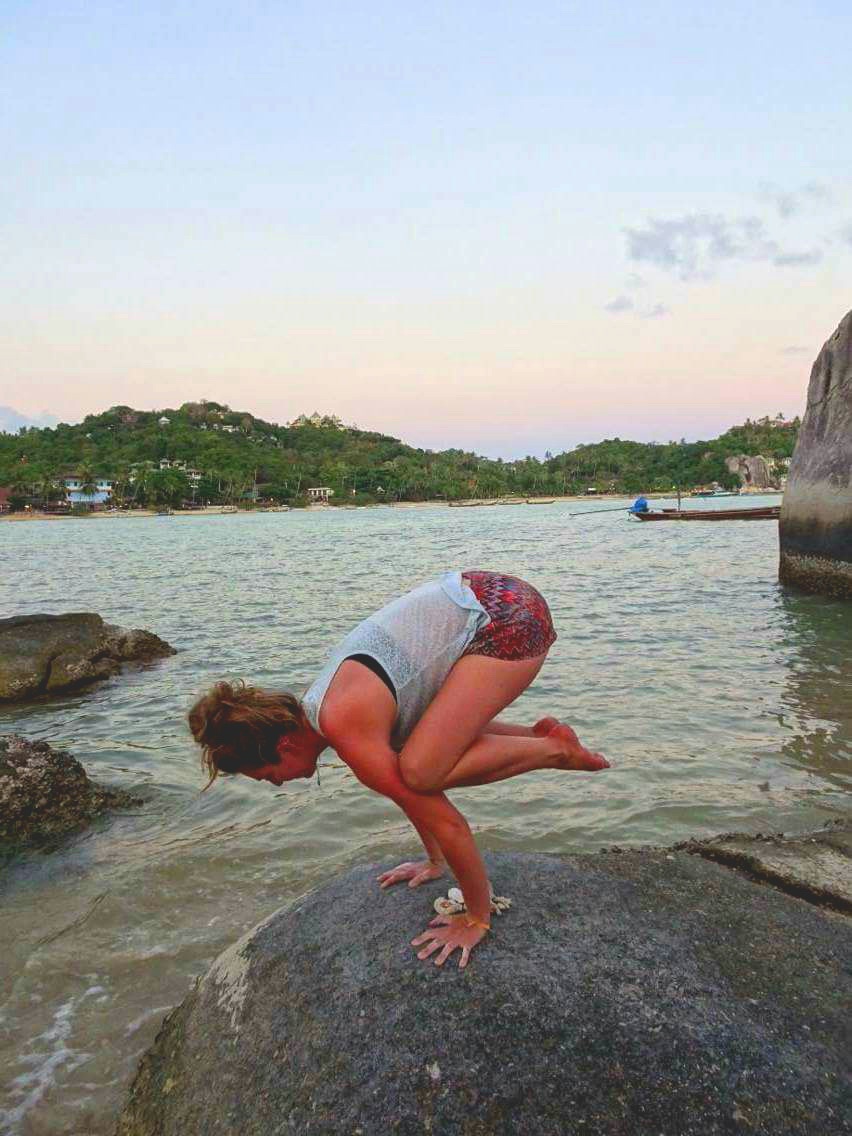
Once you’ve mastered crow, ok I say crow… More baby crow. Next is mummy crow.
image

My excuse for months was that my triceps were too “muscley” I’m a climber it doesn’t work. Your triceps and arm pits are only there to stabilize you in crow pose, try not to let them take too much of the weight.

Come to standing, legs apart a little. Forward fold with bent (yes bent) legs, dropping your palms down in front of your toes. Keep your gaze forward as you place both knees as high on your triceps as you can. Again, like baby crow, bringing the weight over the hands. Personally I then bring up one foot at a time, visualising drawing each heel to my sitting bones. Round your back, pull your tummy in, squeeze your legs therefore pointing your toes. Keep the arms bent to start with. Straightening the arms in crow is very challenging and can be painful on the wrists, so don’t push your body. I seemed to crack it by drawing my chest up. Telling myself to physically straighten my arms resulted in me face planting or hurting my elbows.

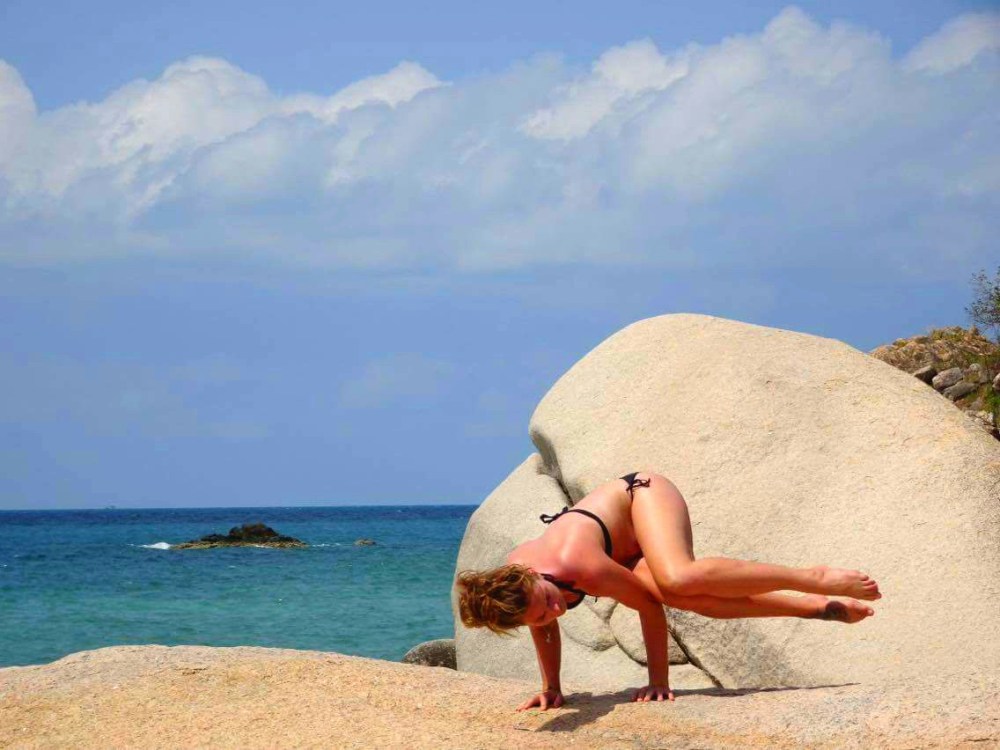
Once crow pose becomes a walk in the park for you, the world is your oyster. New variations of every pose going are constantly being created. Side crow is a fun one to try which can progress to extending the legs.
image

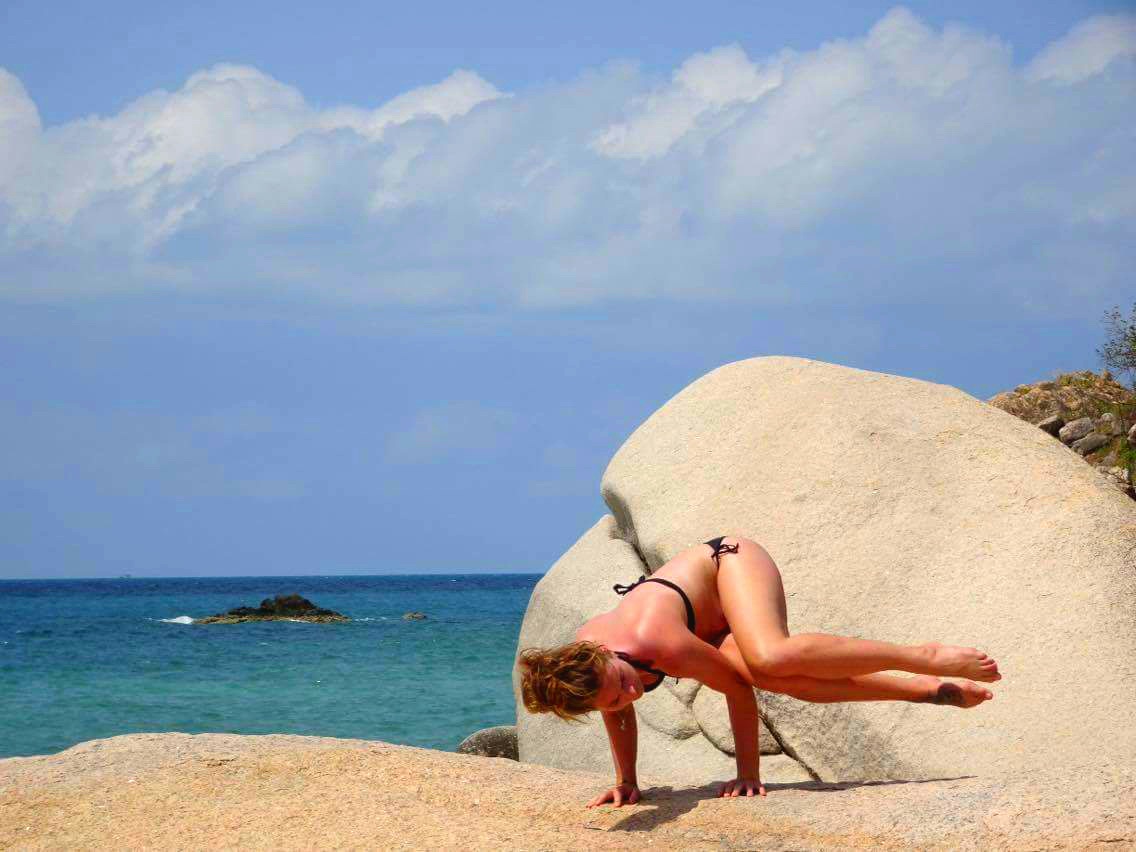
Side crow (above). Come to squatting legs together, then twist your torso, planting both palms to the side of your thigh. Your thigh does need to be parallel with your tricep to then bring the weight over. Some hip opening might be needed if your struggling. Like crow pose, bring the weight over the hands until the legs float up. 
image

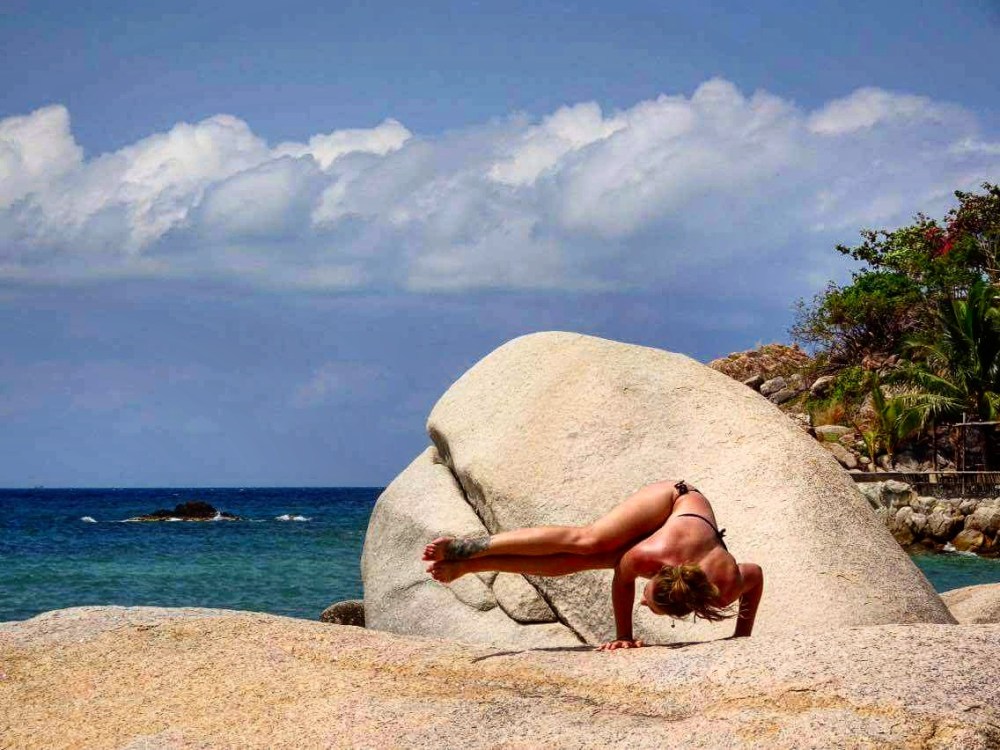
Side crow with extended legs, very challenging and strong on the shoulders. This is/was no walk in the park.

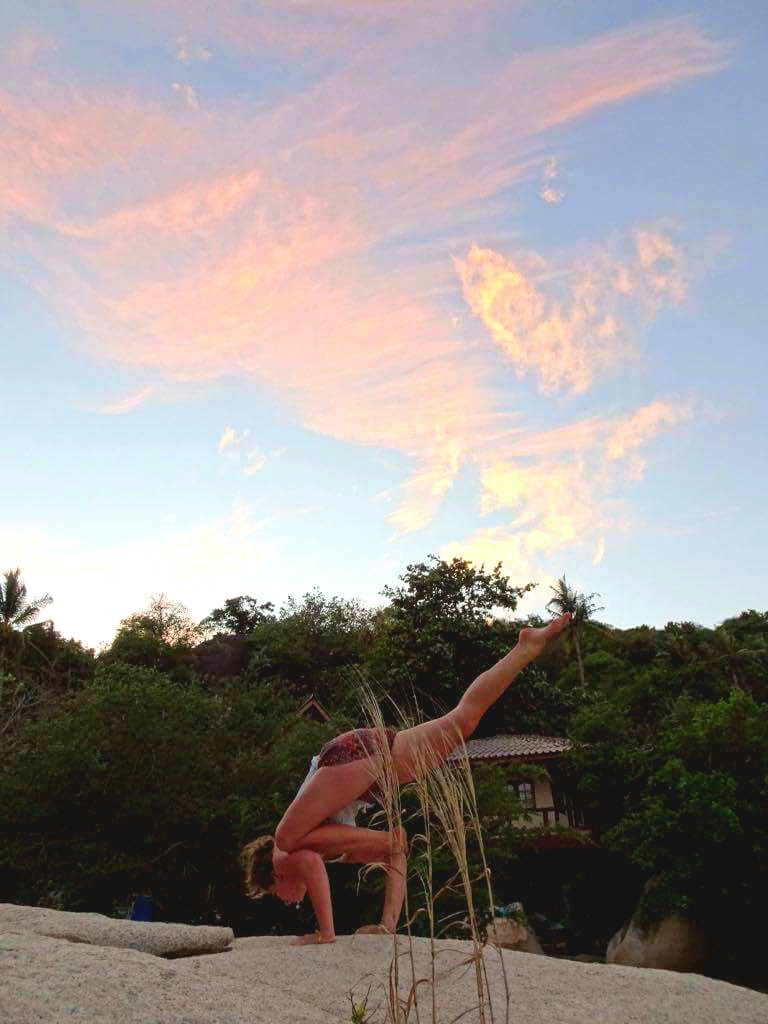
Finally I decided to take off in pigeon pose. Thank you to that wisp of grass that kept my dignity.
image

Arm balances are fun but I’m the first to admit can be frustrating. Flowing through sequences makes me feel calm, opening my back makes me feel, well, open. Arm balances do something different, they mentally and physically challenge me. For me, they’re the best and easiest way to meditate as I’m so focused on one thing.

Gemyoga xx
Climbing fishes

image

We’re in Thailand and its incredible, obviously. We walked straight across the bridge from Burma to the bright lights, fresh tasting food, even hotter weather and the (forever attempting to learn) tuneful Thai language. This is all very very good for the body and mind, things feel that little easier here. More westerners of course, but there’s a reason why we are all here, it’s incredible!

After a long motorbike ride through Chiang Mai in the heat, we found an incredibly refreshing, and much needed waterfall. The rock was so grippy we actually climbed up it! Before that though, I decided fish pose or matsyasana was an appropriate posture to share with you.

This posture feels so good on the shoulders and back ( enjoy climbers ). Lay down on your back, feet together. Bring both palms underneath your sitting bones, so you’re basically sat on your hands. As you take an inhale, start to role your shoulderblades together, pressing your palms down into the ground. Your chest will begin to rise as well as your lower back losing contact with the floor. Try to keep rolling your shoulderblades together until only your elbows, forearms and palms remain in contact with the ground underneath your body.

Allow your head to drop back, however, and make sure the crown of your head is still in contact with the floor. Matsyasana is not an inversion. Pull your toes back as much as you can, until your heels come up if you like.

Enjoy this pose for as long as you like, come down gently by opening your shoulders back to the floor and releasing your hands. The idea of fish pose is to mimic the image of a fish. Your ribs protruding are the scales of a fish, down to your feet which resemble the tail. Go free fishes.
Gem yoga x

Spine tingingly beautiful

We are slowly moving towards the border of Thailand, in another superb place called Hpa An. It reminds me very much of a place in India we visited called Hampi. Dazzling green mountains, the custom ear to ear warm smile off the Burmese people, along with jaw dropping caves sheltering you from the 40 degree heat.

Every few days we move, which usually includes a long bus/car journey along with a new place to sleep, which then means another new mattress for our spines to figure out. I obviously studied the spine a lot during my teacher training, but never had something explained so simply to me as by James’s parents. Your mattress is one of the most important things you can own as you spend up to half your life on it, and you should make sure you get the best you can afford. You rely on it both morning and eveing, and when you’re poorly, upset or exhausted. A lot of your life is actually spent on your matress and laid on your spine, so take care of it!

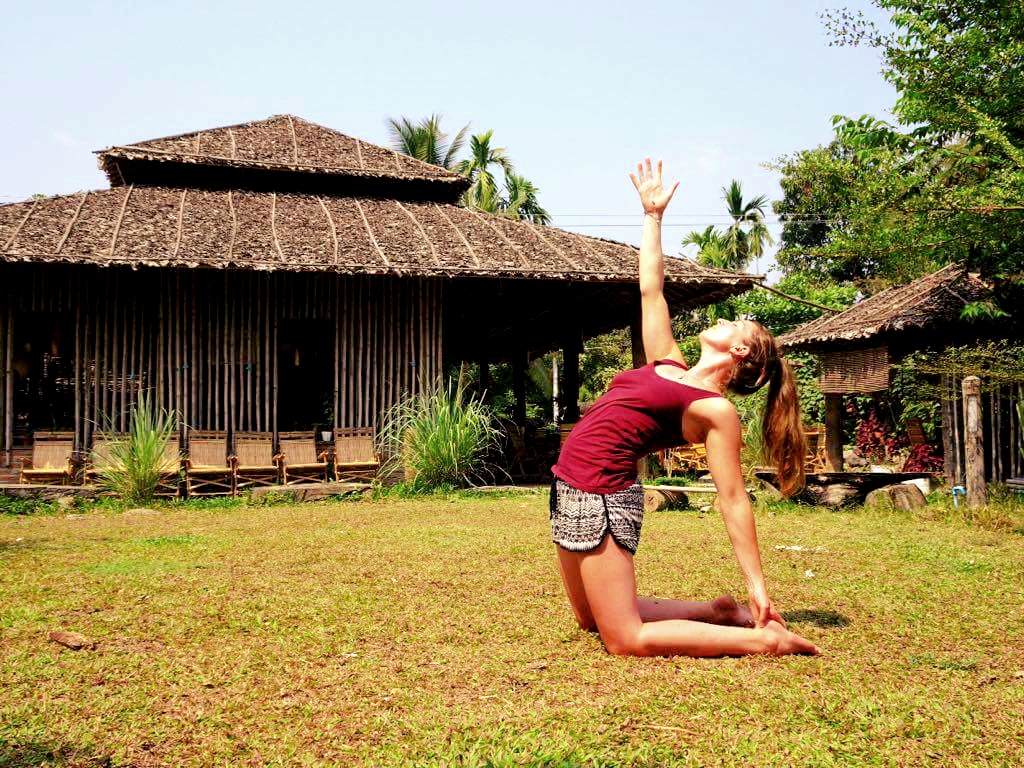
Ustrasana or camel pose a perfect asana to take care of your spine with variations from beginner through to advanced. Start on all fours, palms underneath shoulders, knees underneath hips. Gently bring the body up, while keeping knees, shins and backs of the feet on your mat. Keeping the left palm on the left thigh, inhale the right hand up and exhale it back to rest on the right heel. Bring the left hand up to the sky, keep the gaze straight up the left hand. Try to hold for at least five breaths. When you’re ready to release the pose, push down with the right hand and imagine someone is pulling your left hand forward, squeezing your stomach as you do this, until your body is upright. Rember to repeat on the oppsote side.

image

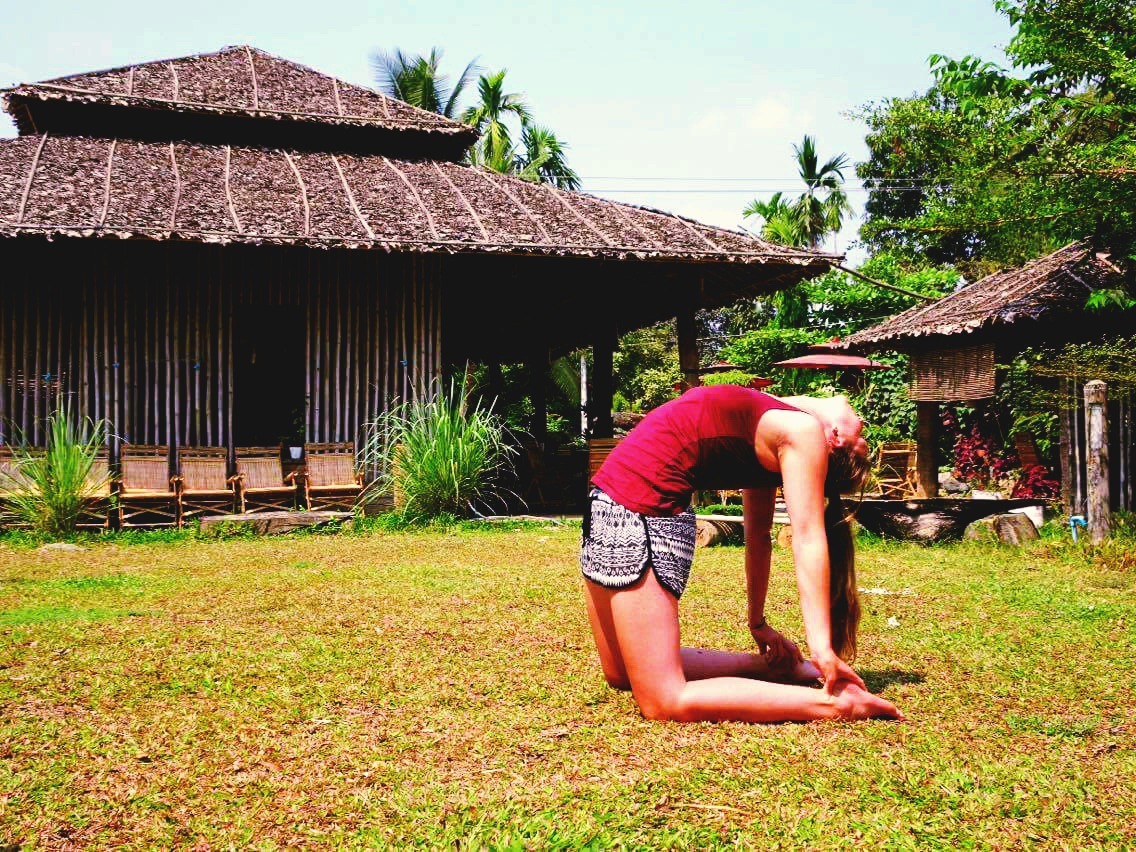
After repeating this on both sides maybe a few times, listen to your body. You can take the pose further by bringing both hands back to your heels. During this asana focus on pushing your hips forward rather than bending your spine. If you’re comfortable, gently lower your head back.

image

If you feel ready to try something a little more challenging, Urdhva Dhanurasana or wheel pose is lots of fun to play around with. Make sure you have a nice soft mat underneath you the first time you try. Mentally it made me feel much more secure whilst coming out of it.

Lay on your back bringing the heels as close to the sitting bones as possible. Next, bring your hands back over your head onto the ground, elbows pointing away from your head. As you inhale push both your palms and feet down into the ground. Don’t force your body into anything, it’s fine for your arms to stay bent. Push your chest and hips up and take as many breaths as feels comfortable. Roll your spine gently back to the ground before hugging your knees to your chest and rocking back and forth, and side to side to give your spine a little well deserved massage. Today, I took my wheel pose a little deeper onto my forearms, with an added hamstring stretch.

image

Love me x